Parental stress and burnout
How long-term parenting stress becomes burnout, and what that means for children.
I grew up in a rural village in Tamil Nadu, India, watching my blind father fight his way to becoming a teacher. That fight led me to social work, with families in villages, prisons, and HIV programs across India. Today, at the University of Tennessee, I study why parents burn out under long-term stress, share that research at national conferences, and teach future social workers to ask better questions of the people they serve.
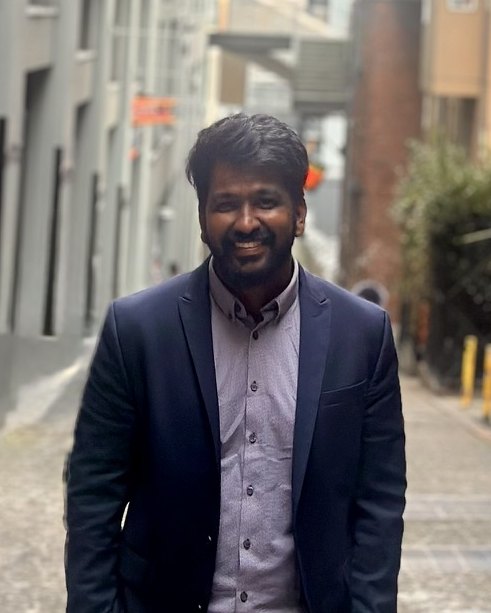
Raising a child is demanding. When that stress lasts for months and years, some parents reach burnout: exhausted, distant from their children, and no longer the parent they want to be. My dissertation asks how that happens, and what could help. It anchors a wider agenda on trauma in families, prisons, and marginalized communities, shown below.
Guided by the Balance Between Risks and Resources theory of parental burnout (Mikolajczak & Roskam, 2018): burnout grows when a parent's demands outweigh their resources for too long.
Stress and burnout consistently occur together. Only a few studies test which comes first, and none follows stress that lasts for years.
Following the same U.S. families for six years lets me ask whether earlier stress comes before later strain.
Comparing parents across countries shows which parts of burnout travel across cultures and which depend on context.
Lucio, R., Schultz, B., Ochocki, S., Stalnecker, D., Srinivasan, S., Shayman, E., & Alvarez, M. (in press). Implementing data-driven school social work practice: An examination of data use, needs, and integration. Children & Schools.
Srinivasan, S., & Mathew, A. R. Childhood abuse, pelvic pain between periods, and reproductive healthcare utilization: A cross-sectional study in the United States. Sexual & Reproductive Healthcare.
Srinivasan, S., Lucio, R., & Brand, N. Organizational support for school social workers entering practice: A qualitative cross-case analysis. Child and Adolescent Social Work Journal.
Srinivasan, S., & Mathew, A. R. Parenting under sustained stress: A conceptual framework for a text-supported intervention with caregivers of adolescents. Child and Adolescent Social Work Journal.
Several additional manuscripts are in revision/preparation, on parental trauma and burnout, families affected by incarceration, and trauma-informed systems of care.
How do stress and trauma move through families and systems, and what helps people recover?
How long-term parenting stress becomes burnout, and what that means for children.
How parents’ trauma shapes adolescents’ risk behavior, including cannabis use, other drug use, and dependence, in families, schools, and care settings.
Mental health and suicide risk among incarcerated people and prison staff, and trauma-informed approaches that support both.
Transgender people, people living with HIV, tribal and rural communities, women’s reproductive health, and communities facing climate change and disasters, with AI support systems built to reach them safely.
Open to collaboration. I welcome co-authors and research partners, especially in school social work, family well-being, and prison mental health. Get in touch
Safe, ethical, and trauma-informed use of AI and text-based tools: digital supports that reach caregivers between visits, early warning of rising stress from daily check-ins, and preparing students to use AI with clients’ dignity and privacy at the center.
How climate change, floods, cyclones, and heat strain families already under stress, and what helps them recover. Environmental justice for rural, tribal, and coastal communities, and trauma-informed crisis response.
Parenting stress, parental burnout, and adolescent well-being, including families involved with child welfare, and the well-being of the school social workers who serve them.
Adolescent risk, parental trauma, and families affected by incarceration; mental health and suicide risk among incarcerated people and prison staff, with seven prisons of practice experience.
Caregiver mental health, parental alcohol use, adolescent cannabis and other substance use, suicide risk, serious mental illness, and trauma across the life course.
Reproductive and maternal health, HIV prevention, and transgender people’s access to trauma-informed care.
Field research and practice across seven Indian states, with professional working ability in eight Indian languages.
Systematic reviews, longitudinal and multilevel modeling, qualitative research, and government program evaluation.
Most students expect research to be the course farthest from practice. I teach it as the course that helps them see their clients and communities more clearly.
Every student builds a research question from their own field placement, whether in a school, a hospital, or a child welfare office.
They learn design, sampling, and ethics by applying each one to a problem they care about. Who would a convenience sample leave out at your agency?
Students take what they learn back to their peers and agencies, and every finding raises a new question.
Every student builds a staged research proposal from a question in their own field placement: the Field Question Project. After fall 2025 student feedback, I rebuilt class time around group activities tied to placements and expanded office hours.
Guest lecture for the summer section of the same required research course.
Supported honors students as they connected research, practice, and their own professional growth.
Gave students detailed feedback on their work, with practical guidance for school-based practice.
Teaching preparation: Teaching Methods in Social Work and Teaching Practicum, University of Tennessee, Knoxville.
Three folders, four roles in each. Open one to see what I was responsible for, the skills it took, and how it shaped me.
MSW in Medical and Psychiatric Social Work: field education in villages, psychiatric hospitals, tribal communities, and a 30-day psychiatry placement at a medical college hospital
How it shaped me: learning begins with careful observation and respect for people's language, culture, and the weight they carry at home.
A community mental health program serving rural villages
How it shaped me: psychiatric knowledge must be explained in plain language, and families are learners too.
A prison health project across seven prisons
How it shaped me: how to teach adults who arrive tired, skeptical, or afraid, and that caring for helpers is part of the work.
A residential care program for care-experienced young people
How it shaped me: young people rise to the expectations adults hold for them, and learning grows when a community is brought into the room.
District development planning research with a state government
How it shaped me: research is a tool for counting the people others miss.
Social and environmental impact assessment of a solar energy project
How it shaped me: evaluation is a team skill, and a clear report is a form of teaching.
Annual evaluations with the Kerala and Tamil Nadu State AIDS Control Societies
How it shaped me: evidence must be gathered with respect for stigmatized people and used to improve their services.
Parenting stress, parental burnout, and adolescent well-being
How it shaped me: the questions I carried from practice now have the methods they deserve.
Papers and posters at national social work and public health conferences, from Seattle to Washington, DC
How it shaped me: presenting to researchers from across the country taught me to explain years of work in a few clear minutes, and to learn from every question.
Required course in the Bachelor of Social Work program
How it shaped me: students learn research best when it starts with a question they care about.
School Social Work (online MSW) and the BSW Honors Integrative Seminar
How it shaped me: good feedback is specific, kind, and points to the next step.
Students and care-experienced young people
How it shaped me: a teacher who believes in a student can change what that student thinks is possible.
Prison staff, peer educators, project staff, families, and communities
How it shaped me: in every role, I was also a teacher.
From the forests of Melghat to the coast of Nagapattinam, every setting asked the same question in a different language: who gets to ask for help, and who is heard?
Home visits and tuberculosis and HIV case-finding with four tribal communities in the hills of the Western Ghats.
Tribal and forest communitiesWorked alongside a professor of psychiatry in the state's urban mental health program, with families of people living with serious mental illness.
Urban psychiatric careTraveled across the districts of Vidarbha, from Nagpur and Amravati to Chikhaldara deep in the Melghat forest. Supported household and institutional data collection in tribal, rural, and urban areas of 100 villages for district development plans with the Government of Maharashtra and United Nations partners, and met district collectors alongside the project leader.
Tribal and forest communitiesWorked alongside women living with serious mental illness and their families, in their own villages and their own language.
Rural and coastal mental healthHelped build and lead the team that assessed the social and environmental impact of a 2-megawatt solar project at the Indian Institute of Management, Tiruchirappalli.
Research and evaluationCounseled people across seven prisons, listening to stories that rarely leave the prison walls.
PrisonsEvaluated HIV prevention programs across Kerala and Tamil Nadu, from hill districts to city neighborhoods.
Public healthMentored care-experienced young people in a residential care program on the coast, where we built a library together.
Care-experienced young peopleCarrying the questions from every one of these places into research on parenting stress and parental burnout, and into the classroom.
Research and teachingVisited community organizations across these cities to advise their leaders on advocacy and on strengthening how their programs reach people.
Advisory support to community organizationsFrom my first poster in Knoxville to my latest in Atlanta, I have carried my research to national social work conferences across the country.
Moments from presenting my research, teaching, and practice.
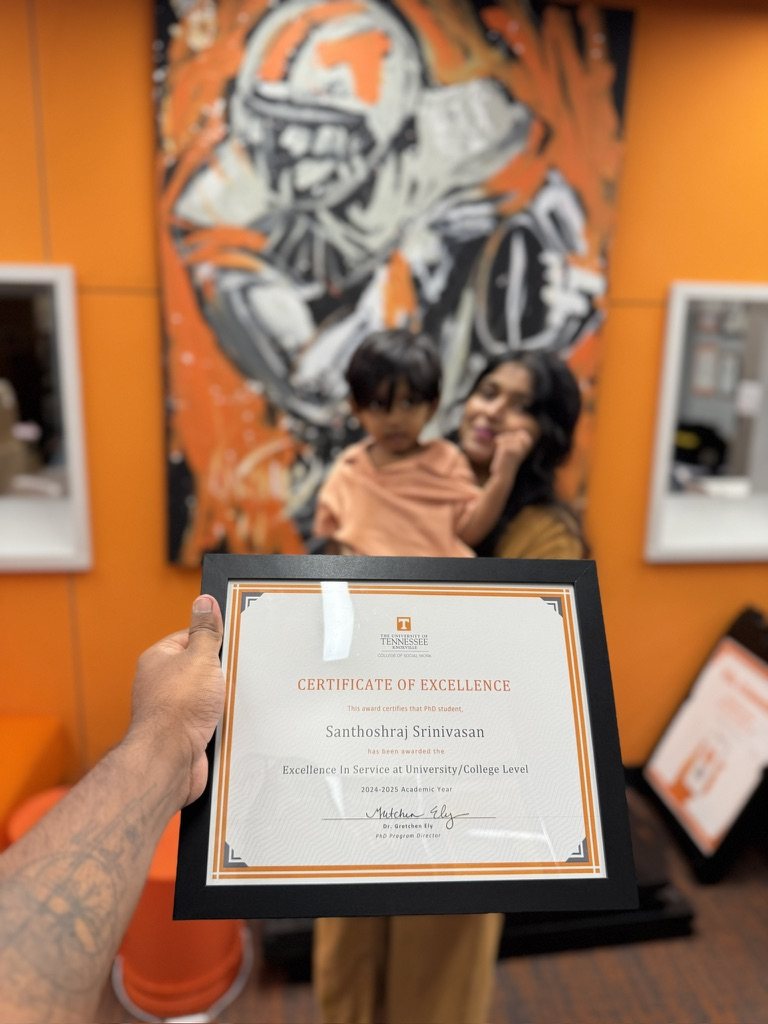
Awarded by the PhD program in the College of Social Work, University of Tennessee, Knoxville, for excellence in service at the university and college level.
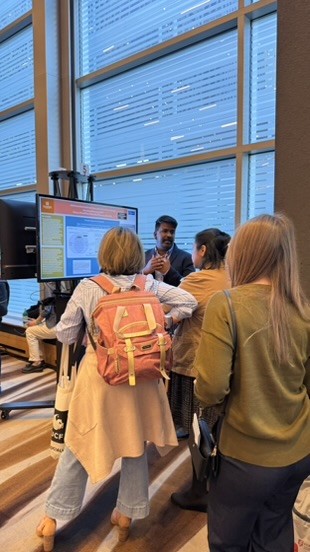
Poster presentation: A relational model of parental trauma, burnout, and adolescent risk
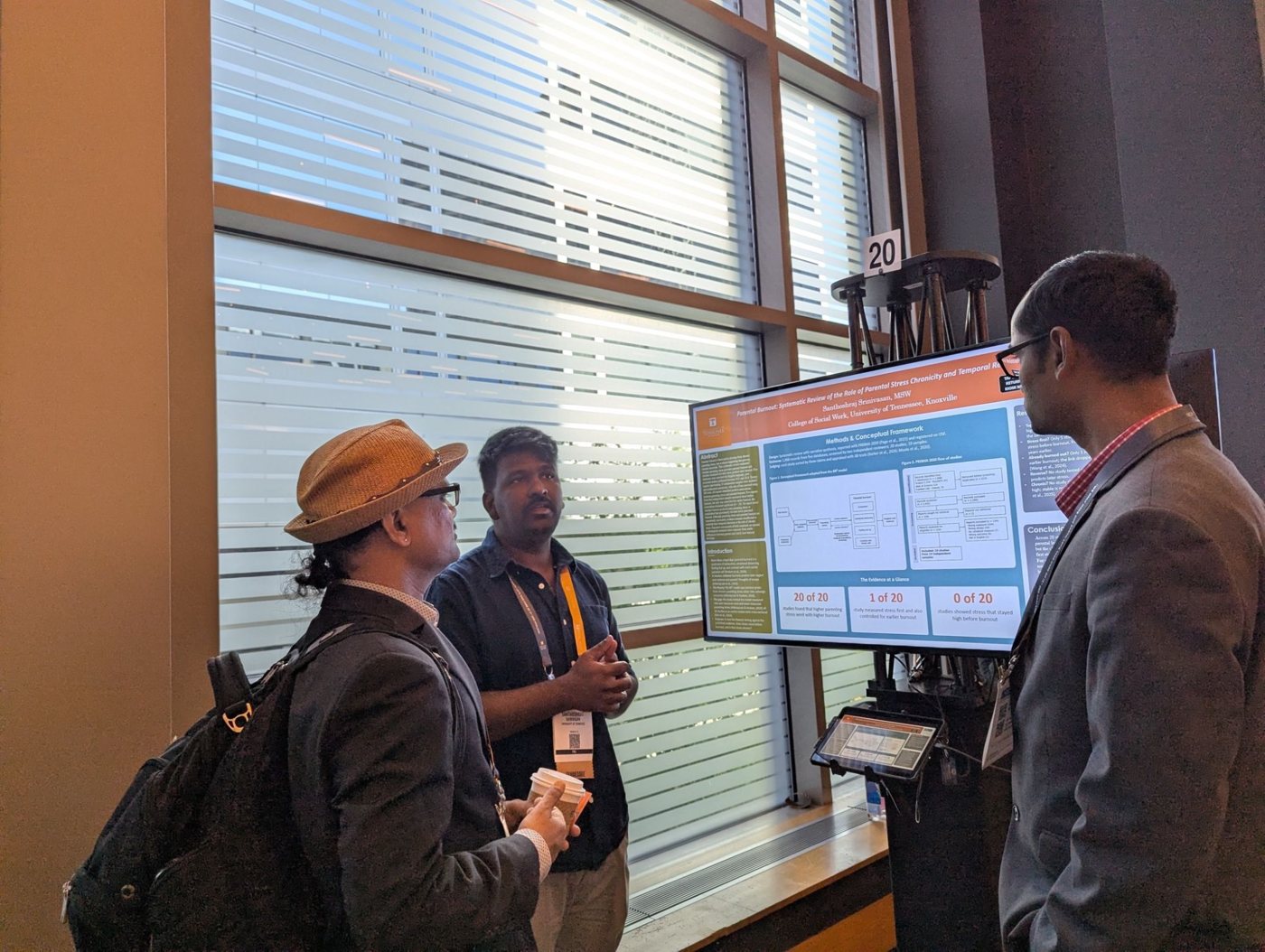
Poster presentation: Parental burnout: A systematic review of the role of parental stress chronicity and temporal relationships
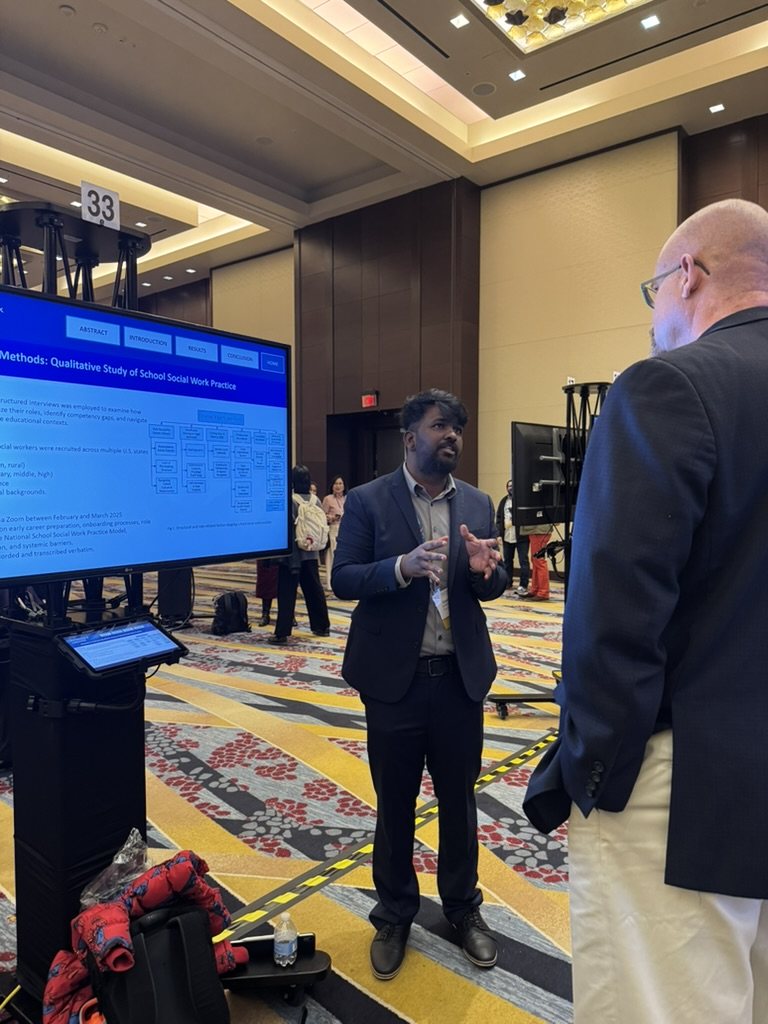
E-poster presentation: A qualitative study of school social work practice. Co-authored with Dr. Robert Lucio (lead author).
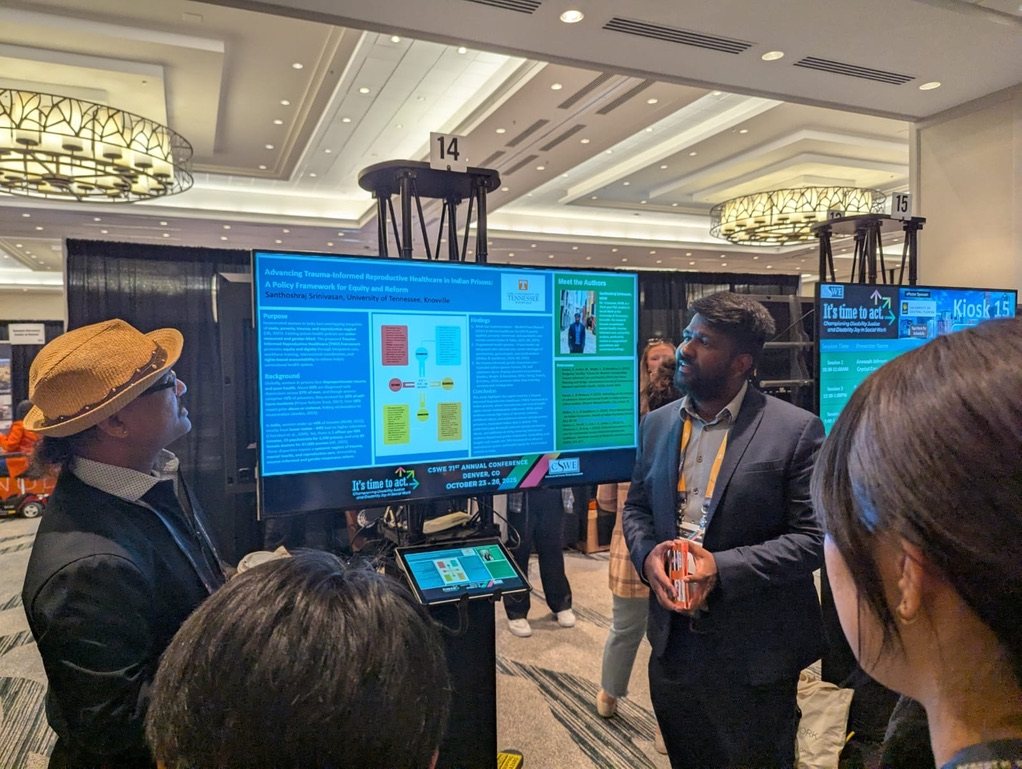
Poster presentation: A policy framework for trauma-informed reproductive healthcare in Indian prisons
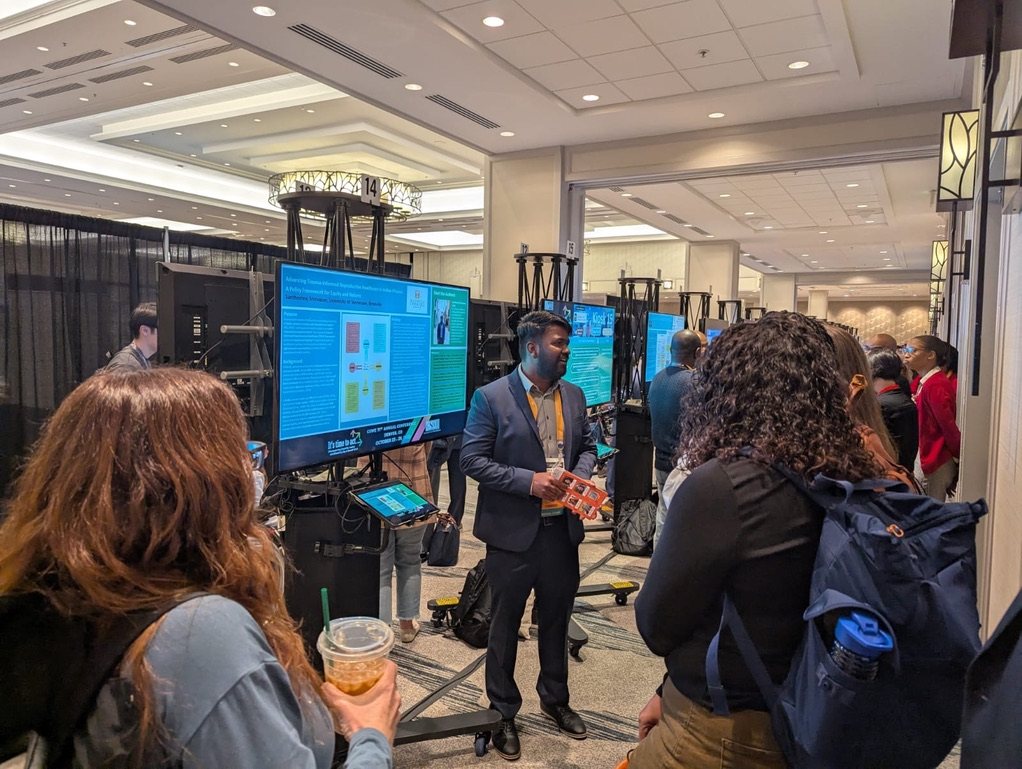
Discussing the policy framework’s implications with conference attendees
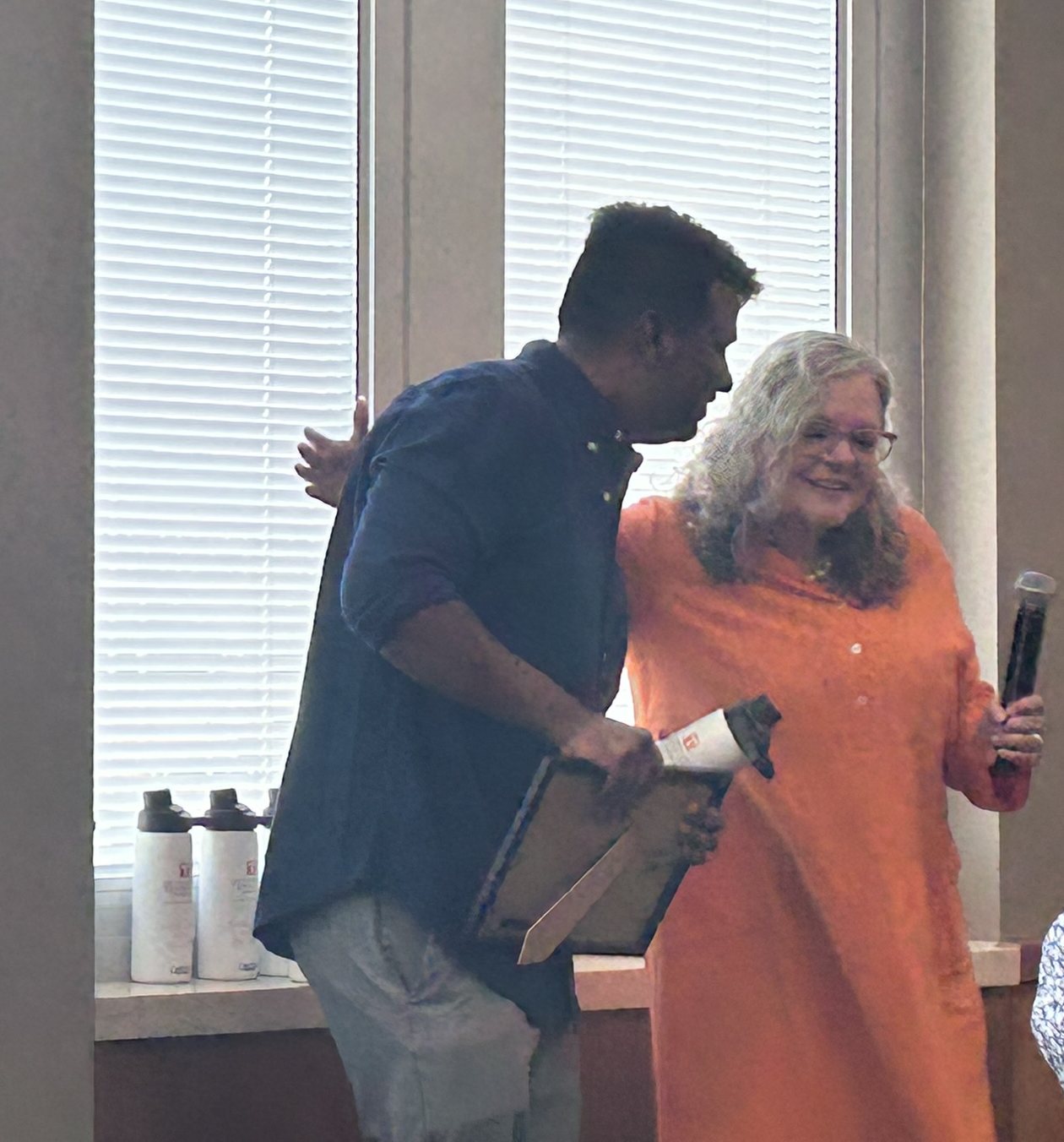
Excellence in Service, PhD Program, College of Social Work, University of Tennessee, 2024–2025
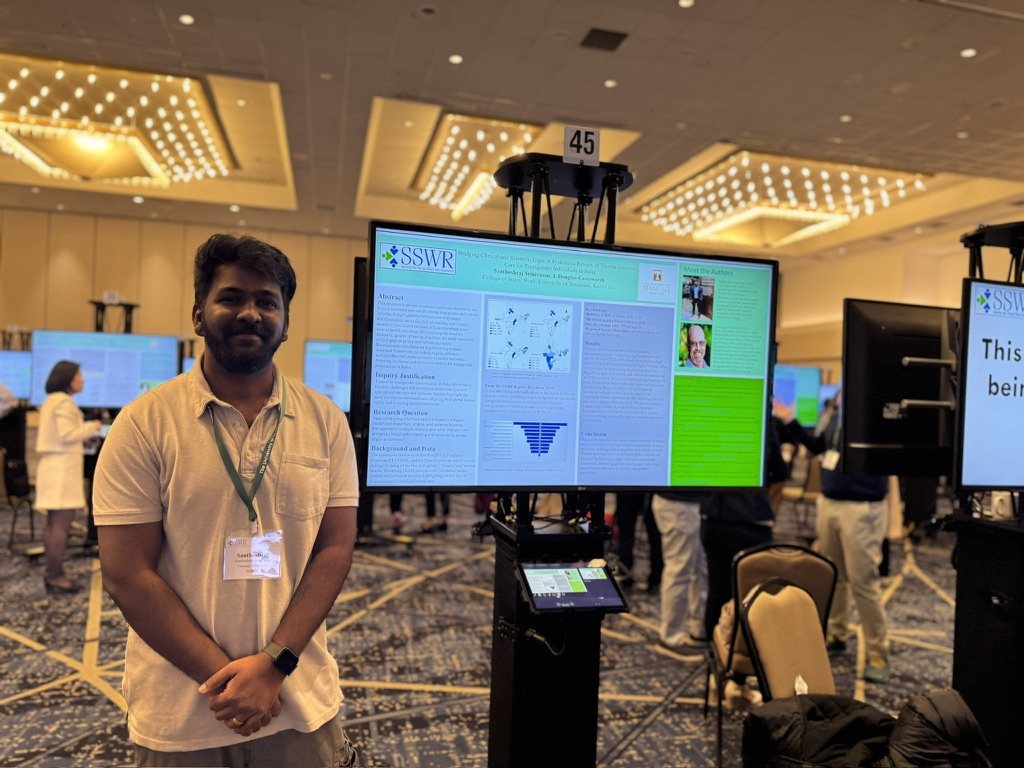
Poster presentation: A systematic review of trauma-informed care for transgender individuals in India. Co-authored with Dr. J. D. Coatsworth.
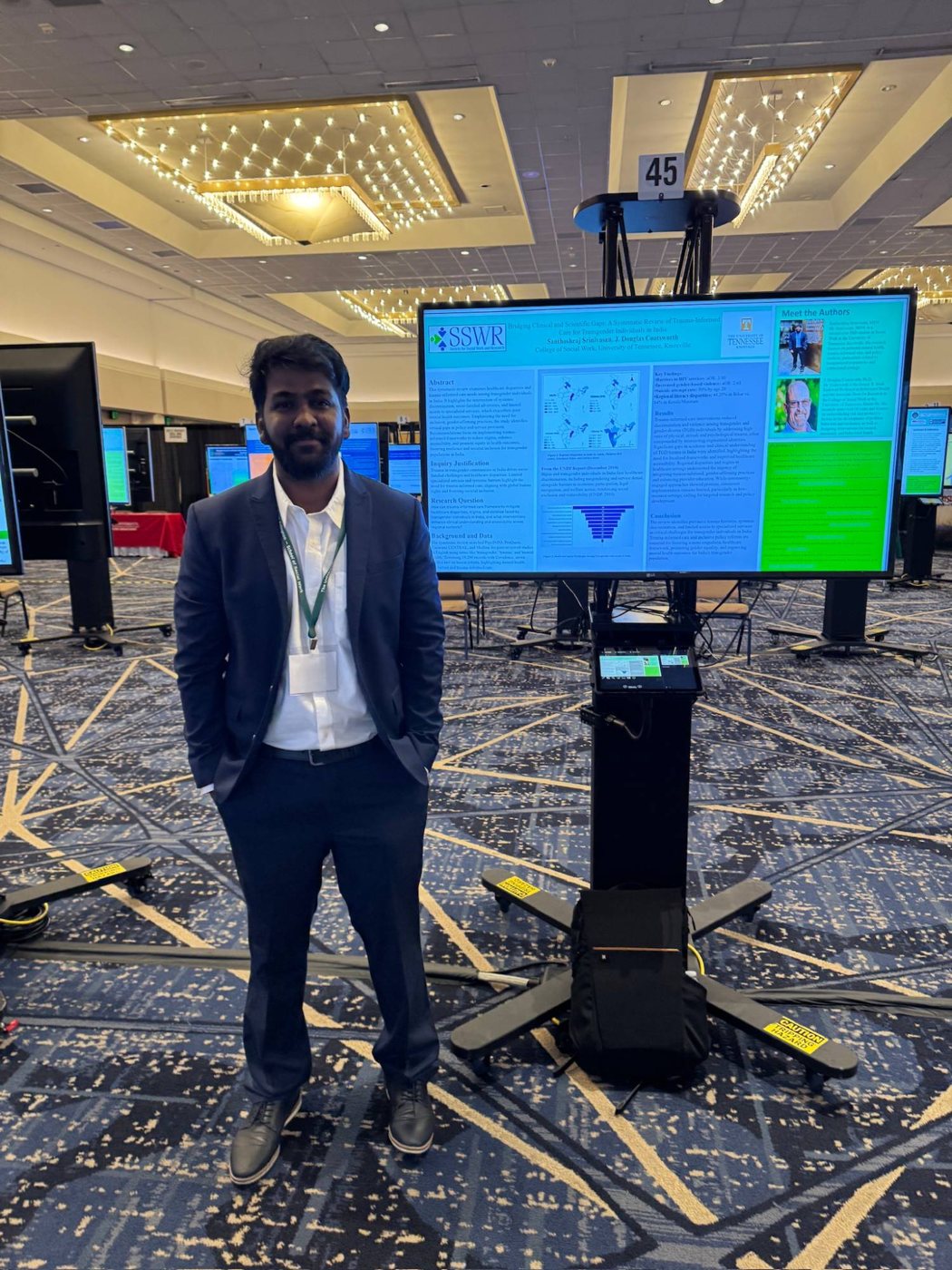
Presenting Poster #45 at the e-poster session
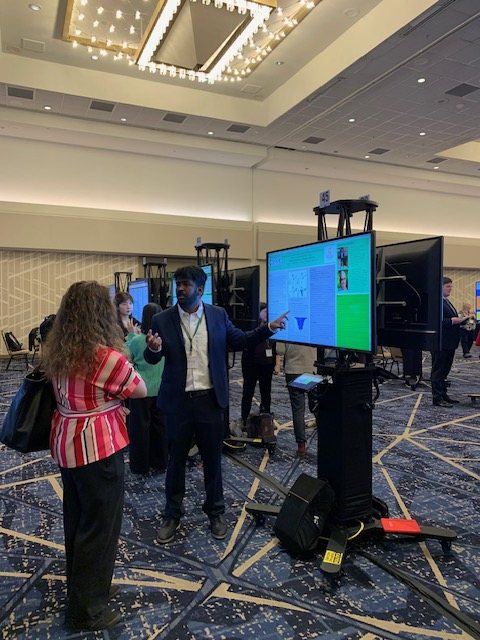
Discussing the review’s findings with a conference attendee
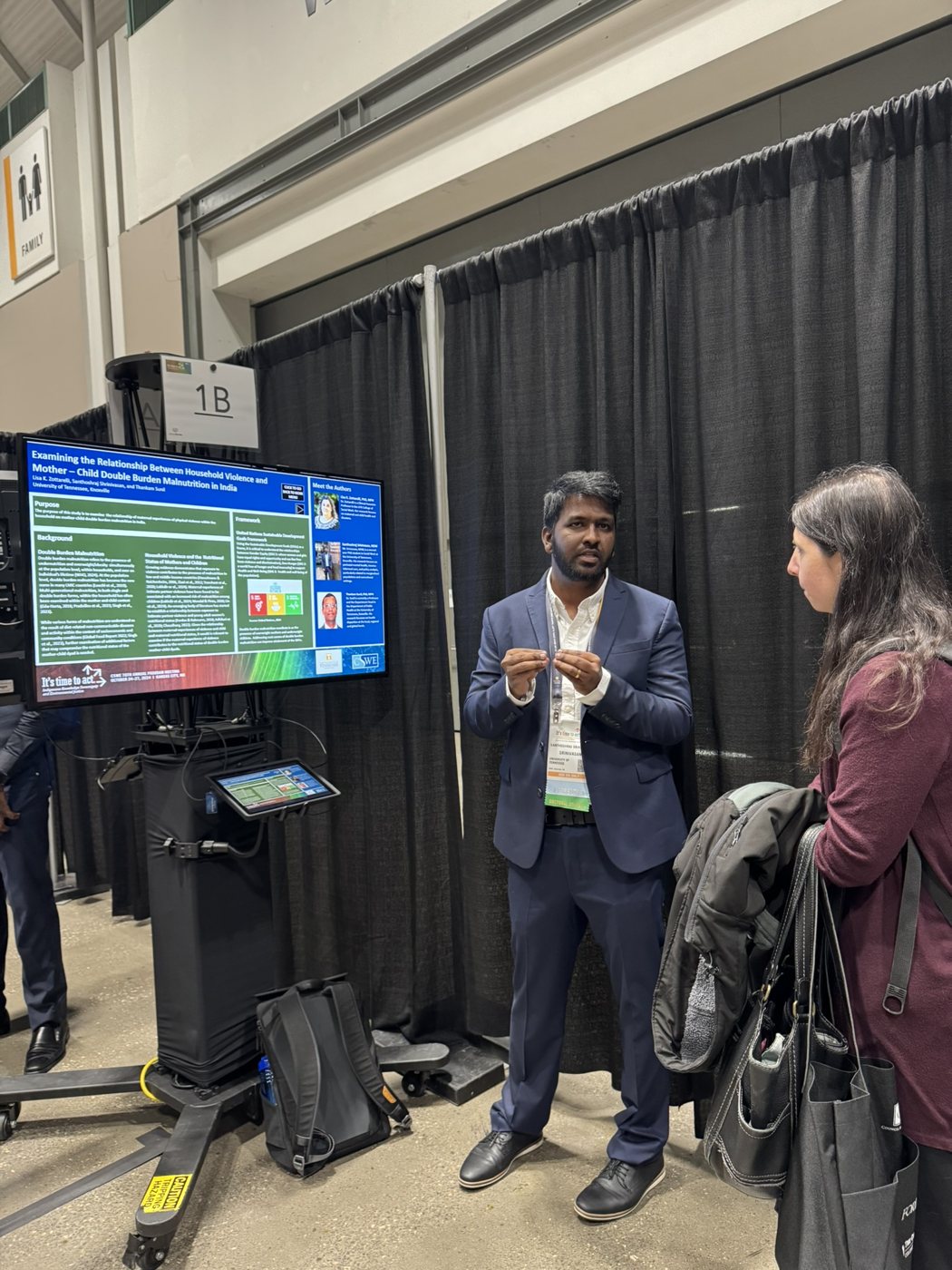
Poster presentation: Household violence and mother–child double-burden malnutrition in India. Co-authored with Dr. Lisa Zottarelli (lead author) and Dr. Thankam Sunil.
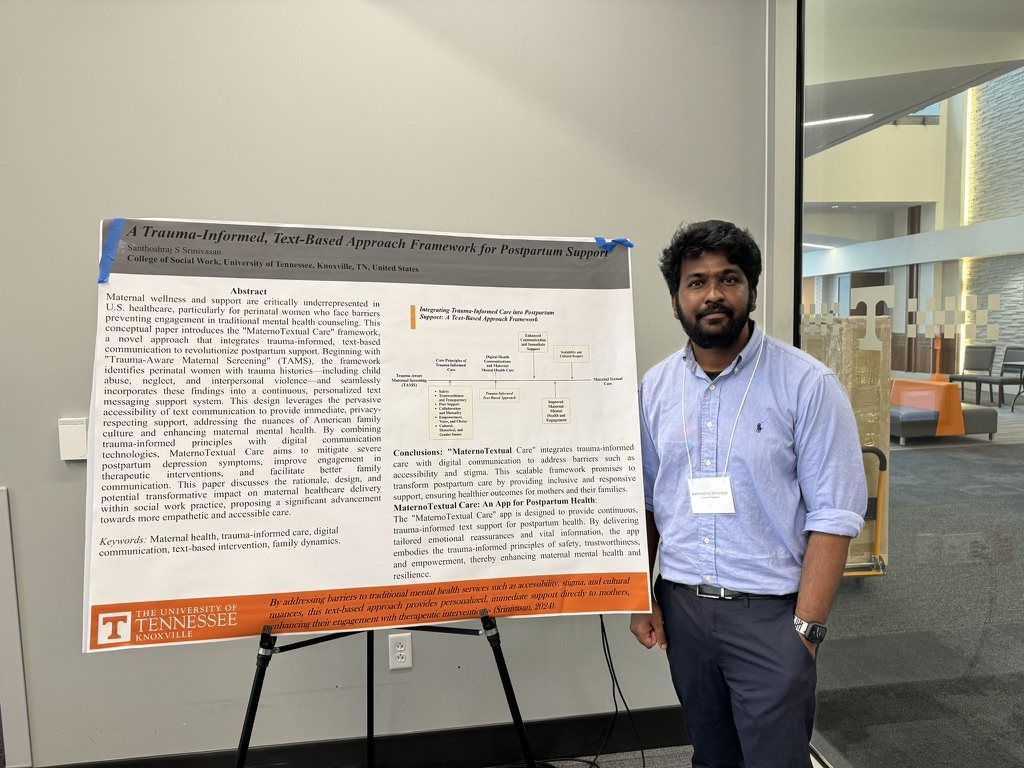
Poster presentation: A trauma-informed, text-based framework for postpartum support
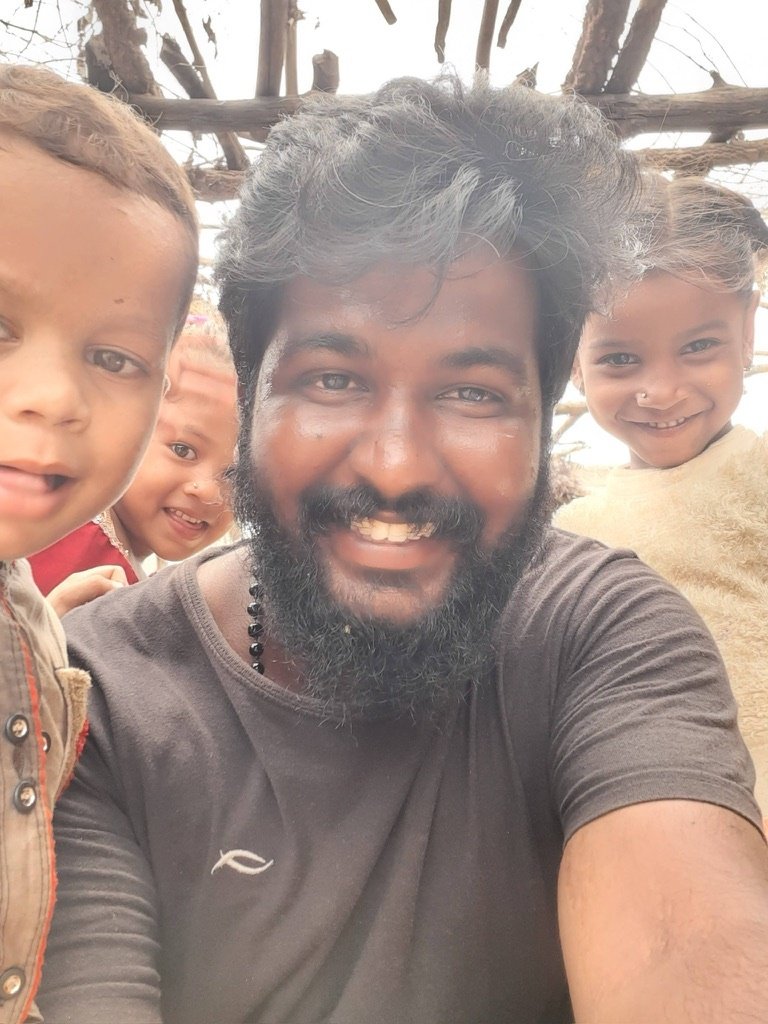
With children in a village community where I worked
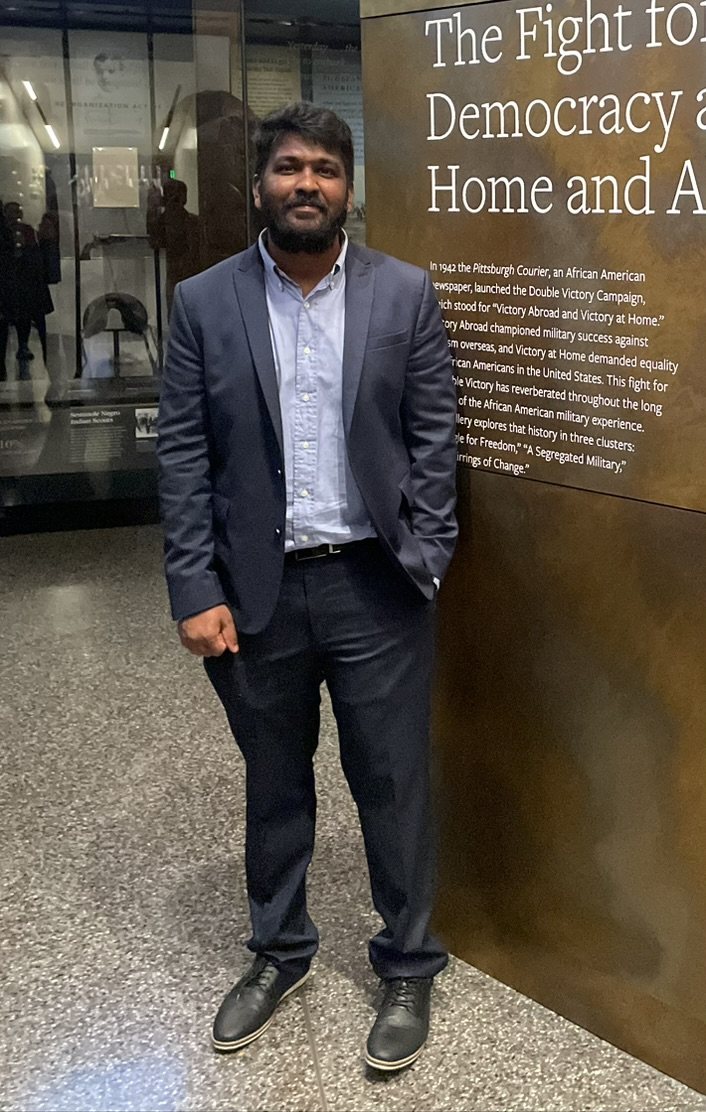
Visiting an exhibit on the fight for democracy at home and abroad
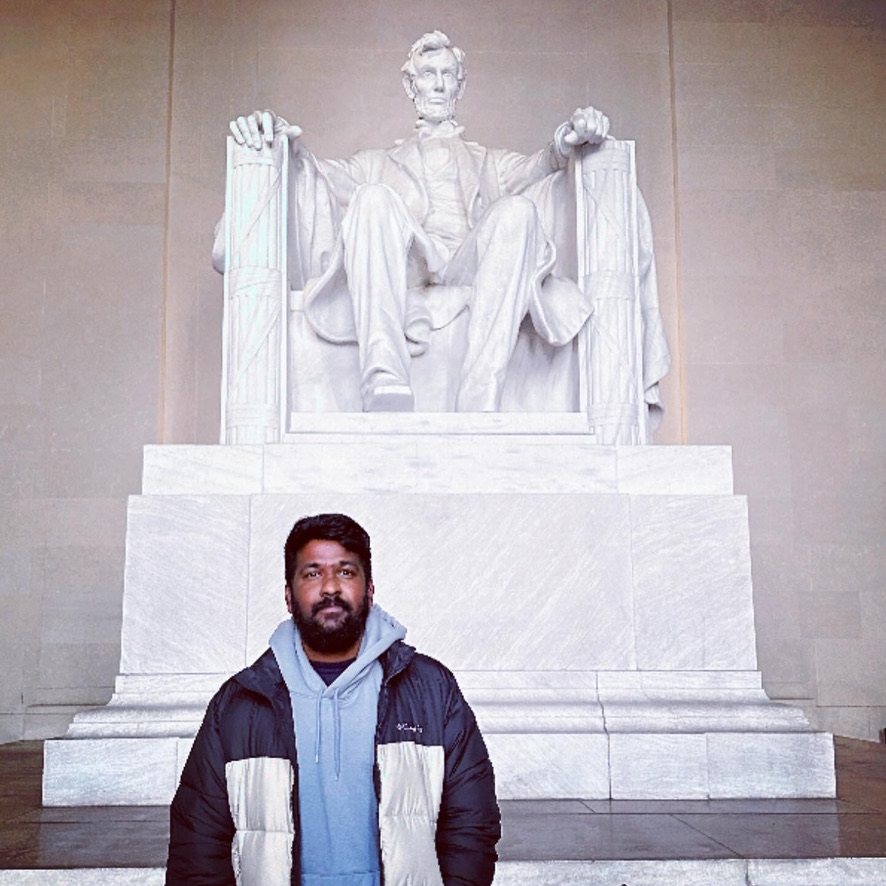
A moment of reflection at the memorial
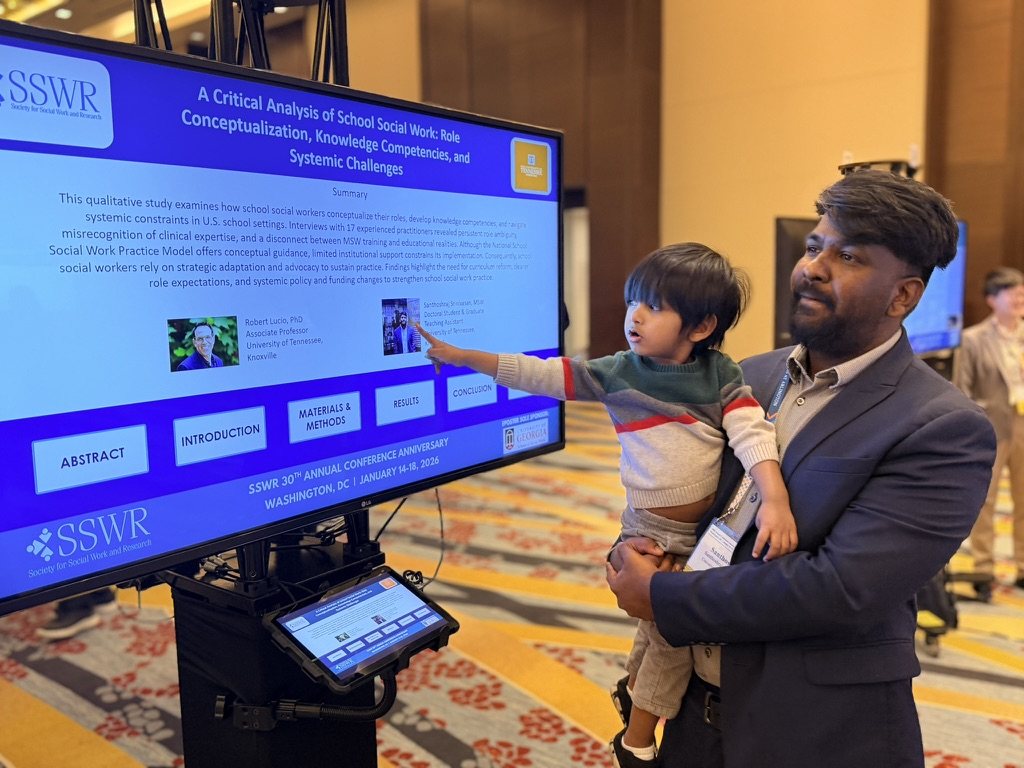
My son joined me at the SSWR Annual Conference
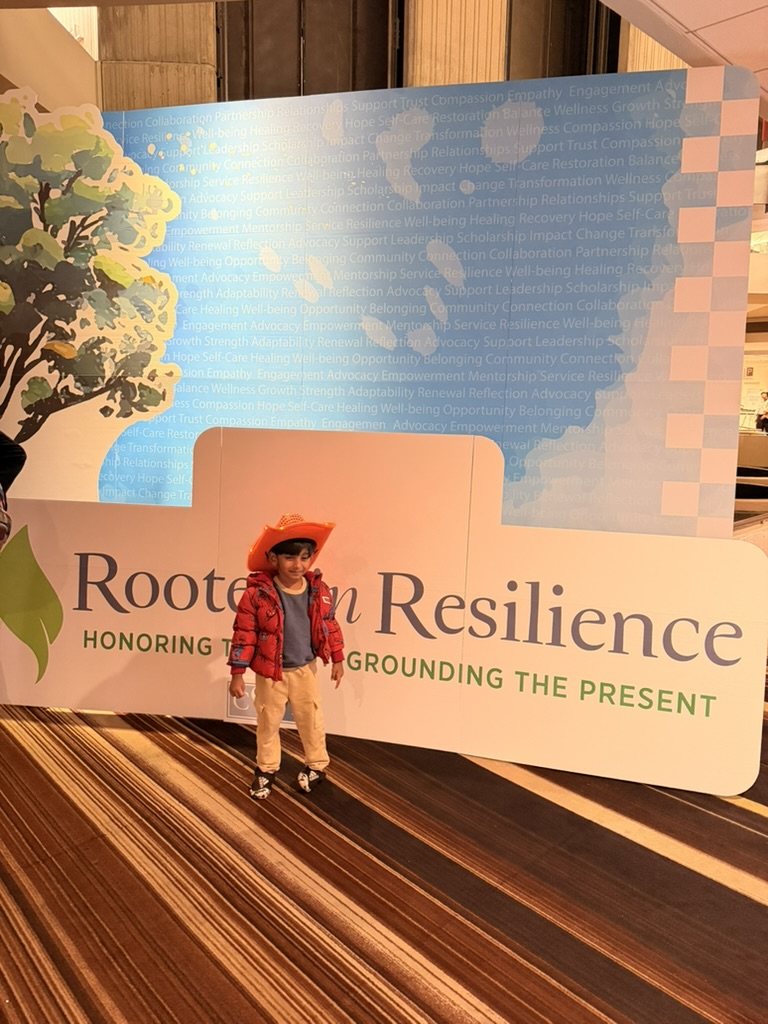
My son at the CSWE Annual Program Meeting
Skills built across practice, research, and teaching.
Research methods made practical, parenting stress and burnout, and practice in multilingual communities.
Counseling in correctional settings, community mental health, and listening across languages and cultures.
Secondary data analysis, systematic reviews, and cross-national studies of families under strain.
Swipe through the places that made me. Wherever I worked, I learned the local language before I tried to help.
English and higher education were out of reach for most families in my village. My father is blind, and he fought for his own education until he became a teacher. He taught me that education is something we reach for and hold on to.
From a sanitation program in remote villages to psychiatric hospitals, to Adivasi communities affected by tuberculosis and HIV in the Nilgiris, and to families of people with serious mental illness in Kolkata.
As a field researcher, I helped gather data across 100 villages and reached households missing from official lists. As a rural mental health program coordinator, I worked alongside women living with serious mental illness and their families, in their own language.
I counseled people in seven prisons, led evaluations of HIV prevention programs for the National AIDS Control Organization, and mentored adolescents in a residential care program, where we built a library together.
As a PhD student at the University of Tennessee, I study parenting stress and parental burnout, and I teach Foundations of Social Work Research as instructor of record.
From Valluvar's chapter on Learning (கல்வி), written about two thousand years ago.
கண்ணுடையர் என்பவர் கற்றோர் முகத்திரண்டு
புண்ணுடையர் கல்லா தவர்.
"Those who have learned are the ones who truly have eyes. The unlearned have only two wounds upon the face."
My father cannot see. By Valluvar's measure, he never lacked eyes: he fought for his education, became a teacher, and opened mine. That is why I teach research. I want every student to see the people that systems overlook.
Some stories are better heard than read. Every episode is free to hear, here or on Spotify.
Field memories, classroom moments, research in plain words, and the people who shaped me.
Until then, you can hear me tell some of these stories on the podcast.
I do not know what my future holds.
But I know my future holds something great for me.
Great opportunities come with great responsibility.
I have carried these words through every move, every new language, and every uncertain year. If you are standing at the edge of something unknown, I hope you carry them too.
Get new stories and podcast episodes by email. It's free, and you can unsubscribe anytime.
One email when a new story or episode is out. No spam.Or follow along here:
For research collaborations, speaking invitations, guest lectures, podcast conversations, or questions from students, send me a note. I read every message.